Breaking News
Showing posts with label Gadgets. Show all posts

Sunday, 23 February 2014

Samsung replaces Galaxy Gear with their own Tizen-powered Platform

If it wasn't clear to first-generation Galaxy Gear owners that they were beta testing a new product category for Samsung, it should be obvious now: the company has just announced not one but two follow-ups to its original smartwatch. Both the Gear 2 and Gear 2 Neo drop Samsung's Galaxy branding and follow the original Gear by a bare five months.

Neither watch's key specs differ all that much from the first Gear. Both of them have 1.63-inch 320×320 AMOLED displays, 4GB of internal storage, 512MB of RAM, Bluetooth 4.0, and an IR blaster, all identical to the first-generation watch. The biggest internal difference is probably a 1.0GHz dual-core SoC of unspecified make (one of Samsung's own Exynos chips seems like a good bet), an upgrade from the 800MHz single-core chip from the first Gear. The extra performance should help to smooth out some of the performance jitters we noticed in the first Gear. Despite the extra CPU core and a somewhat smaller 300mAh battery, Samsung claims that both Gear 2 watches will last two or three days between charges, roughly doubling the runtime of the original Gear.
Samsung has made even larger changes to the software, jettisoning the original Gear's customized Android 4.2.2 in favor of its own home-grown Tizen operating system. Tizen is a Linux-based mobile OS that rose from the ashes of the MeeGo project back in 2011, and counts Samsung and Intel among its major backers. Engadget notes that the Gear watches are two of the very first commercial products to run Tizen, after Samsung's NX300M camera.
Visually, the new software is similar to the old—Samsung's promotional shots all show light white text and images on a black background, saving power by keeping as few of the AMOLED panel's pixels active as possible. However, using Google's debug tools to hack around with the Gear will no longer be possible (not a huge loss, unless you enjoy minuscule games of Angry Birds and Candy Crush). We'll need to wait to get some hands-on time before we can talk any more about how the new software differs from the old. It's also unclear whether the Tizen watches mean that the old Android one will stop getting new updates and apps, or if Gear apps will be compatible with all three watches.

The differences between the Gear 2 and Gear 2 Neo are relatively small. Both include a new hardware Home button on the face, and both will be offered with replaceable wristbands in a variety of colors ("Charcoal Black, Gold Brown and Wild Orange" for the Gear 2 and "Charcoal Black, Mocha Grey and Wild Orange" for the Neo). The Gear 2's face is metal while the Gear 2 Neo's is plastic, making the Neo a little larger but a little lighter (37.9 x 58.8 x 10.0mm and 55g for the Neo compared to 36.9 x 58.4x 10.0 mm and 68g for the Gear 2). Finally, the Gear 2 will include a 2.0 MP camera integrated into the body of the watch, while the Gear 2 Neo includes no camera option. The original Gear used a strap-mounted camera that added extra bulk and made the strap impossible to replace.
Both the Gear 2 and Gear 2 Neo will be available worldwide in April for as-yet-undisclosed prices (expect the Neo to be the cheaper of the two options). Like the first Gear, the watches will only interface with compatible Galaxy phones and tablets and not products from other OEMs or software ecosystems. Thanks to the Android 4.3 and 4.4 updates Samsung has been distributing to its various devices over the last few months, that list should be much more expansive than it was when the original Gear launched.
Ars will be on the ground at Mobile World Congress in Barcelona this week, and we should be able to spend some hands-on time with the new watches there.
Read More

Saturday, 8 February 2014

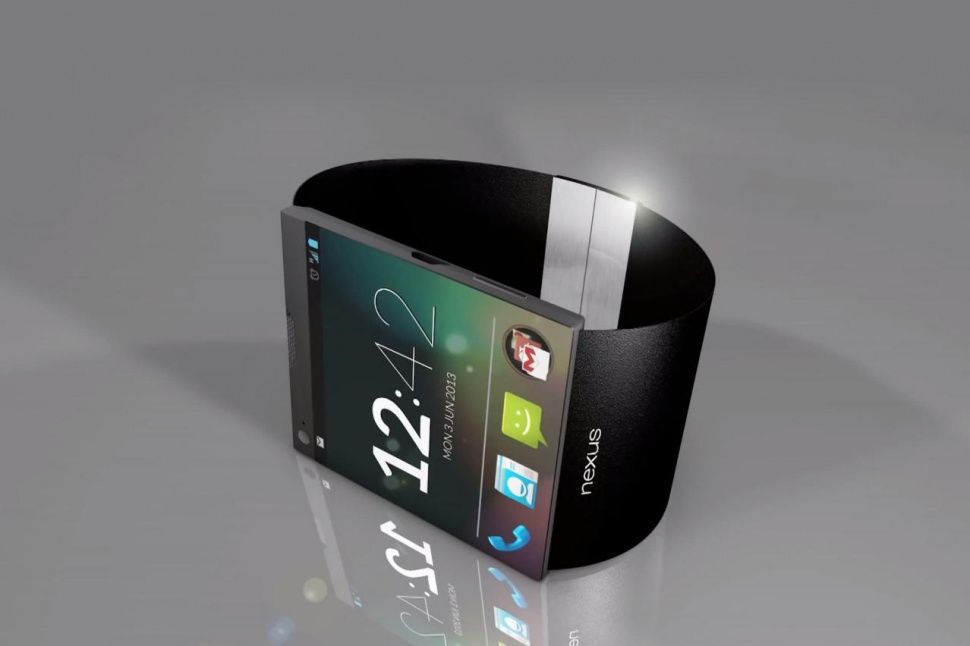
Here’s What Would Make Google’s Smartwatch Awesome


Google is reportedly putting considerable brain power into a smartwatch and we couldn’t help wondering just what they’d add to the burgeoning technology. More than any other company, Google is positioned to solve the single biggest shortcoming in wearable technology: pattern recognition. What is it about our daily activities makes us fatter, more alert? What helps us get better sleep and be more productive?

Buried within the big data of our everyday decisions are gems of truth about how we can become the best versions of ourselves. Last Summer, Google’s new head of engineering and artificial intelligence pioneer, Ray Kurzweil, let me know his plans to build everyone a “cybernetic friend”.


So, we know Google wants build the perfect lifestyle recommendation engine; a watch that tracks our vital signs and movement could do just that. Here are two things it would need:
Connecting Devices – If I walk an extra 2,000 steps per day, but get less sleep at night, do I still lose weight? It’s really hard to tell, because humans are not naturally good at intuitively assessing cause and effect when there’s more than one variable involved (i.e. we love a good and bad guy).
Self-improvement tech has consumers up to their eyeballs in smart scales, watches, headbands, and apps. Only a device that vacuums up this data and mines it for patterns could make these devices useful.
In the (very) near future, health devices are going to able to assess our productivity and eating habits as well. The Muse, for instance, is a brain-wave sensing headband that can monitor our levels of concentration throughout the day. Google’s watch could easily sync with the muse and let me know if my focus goes up on days that I do interval sprints or go to bed earlier.
We hope Google puts the lion’s share of its brain power into the software of the Smartwatch.
The Latest In Vital Sign Monitoring - Steps taken, body temperature, resting heart rate, heart rate variability, motion tracking–all of these measures can be combined to learn essential aspects of our fitness. For instance, the Basis B1 smartwatch is the only wrist health tracker on the market to measure the stage of sleep associated with alertness, Rapid Eye Movement, since it has a laser that measures resting heart rate.
Similarly, Polar’s pending smartwatch for athlete’s purports to know when users are under or overtraining based on the variability in heart beats.
Samsung’s Galaxy Smartwatch can even automatically count reps during a workout. The Focus Trainer app assigns users a calisthenic workout and can sense how many pushups are done during each set. I got an early demo and it did a pretty good job sensing my movements.
Over the next year, there will be more devices that won’t even need to be told when users are working out–it’ll just automatically count each rep. Even better, it’ll tell users if they’re form is off.
To date, wearables have been resigned to self-improvement nuts. To mainstream, it’ll have to do the heavy mental lifting for us. Google’s mission is to organize the world’s information. Every decision we make about our health and productivity is a data point–data points that desperately need simplification.
Read More

LG G Flex Review : Form Without Function

The LG G Flex is many things. It's big, it's curved, it's impervious to scuffing, and it's sort of bendable — but there's one thing the G Flex is not: a great phone. While packing commendable specs and exceptional battery life, the G Flex is diminished by form without meaningful function.

The G Flex is derived from LG's current flagship device, the G2, which our review praised for its gorgeous display, great build, and creative rear power toggle and volume rocker. But in its pursuit of the G Flex's gimmicky curved, bending display, LG cut corners. The G Flex's OLED screen has a lower resolution — 720p, as compared to the G2's 1080p panel — but also considerably larger at a whopping 6-inches, dropping the overall pixel density to 245ppi. While it certainly looks good, it doesn't pop quite as much as the G2's 424ppi or iPhone 5S' 326ppi display.
I've also found that the OLED frequently suffers from image retention problems. Every now and then I'll see a lasting imprint of apps or folders past, which eventually fade after a short period. At first I was concerned that I may have received a faulty unit, but a quick Google search reveals that it's a common problem seemingly without remedy.
And then there's the G Flex's much-touted bendable design, which is both overstated and utterly useless. The extent of the G Flex's malleability is little more than just the capacity to forcibly straighten out the curved frame...slightly. It takes considerable effort and the G Flex quickly returns to form. What's worse, the curved nature of the design doesn't offer any notable utility short of angling the microphone closer to your mouth. It's a gimmick for gimmick's sake.


The one marketing bullet point that is truly useful, however, is the G Flex's "self-healing" finish — a coating that the company claims repairs scratches and dings to the exterior shell. How exactly it works, LG won't say, but based on observation, it seems as though the coating is scratch resistant, but also actively masks minor damage. After a week of using the it without a case, the G Flex remains pristine — unscathed by being tossed into bags or pockets with loose change or keys. However, the feature is less effective with deeper cuts, but so long as you're not deliberately grinding a sharp edge on the case, you should be fine.
Under the hood, the G Flex utilizes a Snapdragon 800 series quad-core processor with 2GBs of RAM and 32GBs of local storage, which, unfortunately for digital hoarders, can't be expanded. Software wise, the G Flex is running Android 4.2.2 Jelly Bean — several iterations behind the latest release — Android 4.4 KitKat. LG has also layered on its own software experience, which as OEM skins go, is actually not terrible. You can personalize many facets of the UI, like color coding folders for faster identification or slapping a custom wallpaper on the app drawer. There are also several LG-unique functions at your disposal, like three-finger gesture app switching with Slide Aside, tapping on the display to wake the phone with Knock On, or splitting the screen in half to run two apps simultaneously with Dual Window.
Performance for both LG's processor taxing multitasking features and standard apps is great. Apps boot up quickly, games run predictably well, and there's no sign of slowdown when running multiple programs at once.

As for photos and video, LG's camera software offers a greater degree of control than the stock experience, the 13-megapixel sensor itself produces mixed results. Daylight exterior photos are crisp, detailed, and balanced, but low-light scenarios throw a wrench in the system. Night photos are often grainy and take on a yellowish hue. The sensor also lacks the G2's optical image stabilization, which makes the camera overall less precise. It's not a bad smartphone camera, but there are better solutions on the market.
But perhaps the G Flex's biggest strength is battery life. With a massive 3,500 mAh battery, which lasted for roughly a day and a half with normal use. It's one of the best performers on the market in that regard.

THE VERDICT :

The LG G Flex is a decent phone marred by unnecessary gimmicks that exist only to serve as marketing bullet points. While there's an unquestionable novelty to its curved, marginally malleable design, it offers no significant utility. Its exceptional battery life and sometimes great camera compensate for its shortcomings, but not enough to make it worthy of a $299 subsidized, 2-year commitment.

Read More

Tuesday, 28 January 2014

Global smartphone shipments top one billion for first time in 2013: IDC


Global smartphone shipments topped 1 billion units for first time in 2013, climbing 38.4 percent from the previous year to 1.004 billion units, research firm IDC said.
Smartphones made up 55.1 percent of all mobile phone shipments last year from just over two-fifths in 2012, IDC said.
Samsung Electronics Co's market share edged up one percentage point year-on-year to 31.3 percent to keep its place as the world's biggest smartphone vendor, while second-place AppleInc's fell from 18.7 percent to 15.3 percent, according to IDC.

Huawei Technologies Co, LG Electronics and Lenovo Group were third, fourth and fifth largest respectively, each with a market share of just under five percent in 2013.
Read More

Blog Archive

About Us

Advertisment

Like Us

© TechBlogWall All rights reserved | Designed By TechBlogWall